#1 Overall Winner
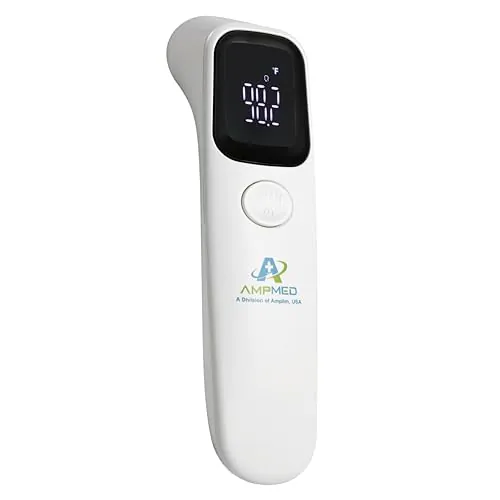
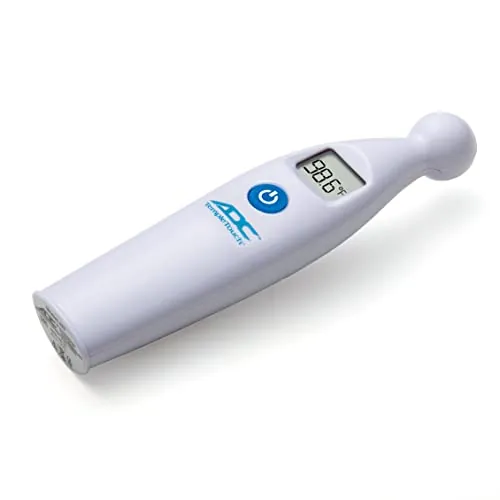
ADC Adtemp 427 Temple Touch Digital Thermometer
- Fast six-second temple reading
Comparison
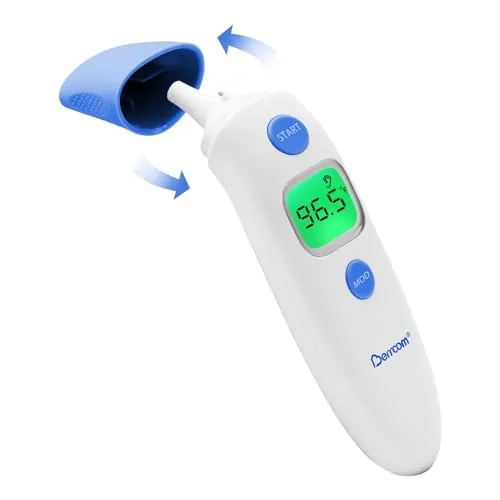
The ADC Adtemp 427 is strongest as a compact temple-touch thermometer with stronger evidence, portability, and warranty-support scores. The Berrcom 3 in 1 is stronger for fast, feature-rich family use, with forehead, ear, and object modes plus a backlit display. The key trade-off is ADC's simpler, more established positioning versus Berrcom's broader convenience features; both receive mixed customer feedback about reading consistency.
#1 Overall Winner
Contender
Choose Berrcom for the strongest overall mix of speed, simple operation, display features, stored readings, and value. Choose the ADC Adtemp 427 if you prefer a compact temple-touch thermometer with stronger supplied support, accuracy, durability, and warranty scores. Neither product has uniformly positive accuracy feedback, so follow instructions and treat unexpected readings cautiously.
Overall winner
Depends on your needs
| Feature | ADC Adtemp 427 Temple Touch Digital Thermometer | Berrcom 3 in 1 Forehead and Ear Thermometer | Winner |
|---|---|---|---|
| Overall assessment | Strong compact thermometer; overall score 75 | Higher overall score at 78 | Berrcom 3 in 1 Forehead and Ear Thermometer |
| Primary format | Temple-touch digital thermometer | Forehead, ear, and object-temperature thermometer | Depends |
| Response time | 6 seconds | 1 second | Berrcom 3 in 1 Forehead and Ear Thermometer |
| Health relevance | Higher health-impact score | Lower health-impact score | ADC Adtemp 427 Temple Touch Digital Thermometer |
| Sleep-use convenience | Can be used while a patient is sleeping | Mute mode, backlight, and non-contact forehead option | Berrcom 3 in 1 Forehead and Ear Thermometer |
| Tracking accuracy | Higher tracking-accuracy score; ASTM compliance stated | Lower tracking-accuracy score | ADC Adtemp 427 Temple Touch Digital Thermometer |
| Stored readings | Last-reading memory | 20 memory recalls | Berrcom 3 in 1 Forehead and Ear Thermometer |
| Ease of use | High ease-of-use score | Higher ease-of-use score | Berrcom 3 in 1 Forehead and Ear Thermometer |
| Safety | Lower safety score | Higher safety score | Berrcom 3 in 1 Forehead and Ear Thermometer |
| Comfort and handling | Higher comfort score; very compact | Lower comfort score; ergonomic feedback reported | ADC Adtemp 427 Temple Touch Digital Thermometer |
| Portability | Very high portability score; 4.7-inch description | Lower portability score; 6.14 inches | ADC Adtemp 427 Temple Touch Digital Thermometer |
| Maintenance | High maintenance score; hand-wash instruction | Same maintenance score; wipe-clean instruction | Tie |
| Value | Lower listed price; strong value score | Higher value score with more modes | Berrcom 3 in 1 Forehead and Ear Thermometer |
| Warranty and support | Two-year warranty stated; higher support score | Limited warranty information supplied | ADC Adtemp 427 Temple Touch Digital Thermometer |
Both products support basic health awareness by providing a way to check temperature at home, but they do not diagnose illness or replace professional assessment. ADC has the higher health-impact score, reflecting its focused body-temperature role, stated ASTM compliance, and stronger measurement-related scoring. Berrcom has a lower health-impact score but offers multiple body-measurement approaches and more stored readings for simple reference. In either case, user feedback on accuracy is mixed, so a single result should be interpreted in context and according to the product instructions.
Berrcom is more useful for sleep-related convenience rather than sleep tracking. Its stated non-contact forehead option, mute function, and backlit display can make a nighttime temperature check less disruptive, and it has the higher sleep-support score. ADC is also described as suitable for use while a patient is sleeping, but its temple-touch method may be less convenient for some users. Neither device tracks sleep or is presented as a sleep-improvement product.
Neither thermometer is a broad wellness or recovery device, but both can support a practical home-health routine through basic temperature awareness. Berrcom has the higher wellness-support score, helped by its multi-mode format, rapid stated readings, and memory function. ADC's simpler design may better suit users who want a dedicated, compact thermometer without extra modes. These devices provide measurements rather than wellness coaching, and no broader health outcomes should be inferred from their use.
Berrcom has a modest lead in effectiveness scoring. Its stated one-second reading time, forehead and ear options, and added object-temperature mode make it more versatile for routine home use. Its high volume of customer feedback also includes frequent praise for speed and straightforward operation. ADC remains competitive, with a six-second stated temple reading, positive usability feedback, and a focused design. However, reviewers for both products report inconsistent or unreliable readings in some situations. Berrcom therefore leads for functional convenience, while neither product has enough uniformly positive review evidence to remove accuracy concerns.
ADC has the stronger evidence-quality score. Its supplied description states that the device meets ASTM E1112 accuracy requirements for intermittent thermometers, which is more concrete product-support information than is provided for Berrcom. That stated compliance should not override real-world limitations: ADC reviews include reports of variable readings. Berrcom's supporting information is more focused on product claims and customer experience, and its evidence-quality score is lower. Positive customer reports can show usability and perceived satisfaction, but they are not independent clinical evidence. Neither product should be treated as a diagnostic device based on the data supplied.
Berrcom has the higher safety score. Its non-contact forehead option may be convenient for shared household checks, and the supplied product information includes auto-off and a color-coded alert. ADC has a lower safety score but is also a battery-powered, reusable household device with stated water resistance and simple controls. No specific safety incidents or comparative hazards are provided for either thermometer. For both products, sensible use means following the instructions, keeping the device clean as directed, and not relying on a questionable or unexpected reading alone when further assessment is needed.
ADC has the higher comfort score and a notably compact stated size and weight, which may make it easy to hold and store. Its temple-touch format requires physical placement but avoids a probe cover according to the description. Berrcom is described by reviewers as lightweight and ergonomic, and its non-contact forehead option can be convenient for users who prefer not to touch the skin. The better choice depends on whether a user prefers compact contact measurement or a larger multi-mode device with a non-contact option.
Berrcom leads for ease of use. The stated one-second response time, backlit color display, fever alert, mute option, and 20-reading memory reduce friction for routine household use. Reviewers commonly praise its speed and simple operation. ADC also scores strongly, with a large display, audible completion tone, auto-off, and last-reading memory. However, some customer feedback indicates that users may need practice finding consistent temple placement. Berrcom is the more intuitive feature-led option, while ADC remains a straightforward choice for users comfortable with a touch-based method.
ADC has the stronger build-quality score. It is described as a small plastic device with water resistance, and its customer feedback includes positive comments on quality and long-term use. Berrcom has a lower build-quality score, although reviewers commonly describe it as convenient and easy to handle. The available data does not provide a detailed materials or construction comparison beyond plastic outer materials. ADC has the score-based advantage, while Berrcom's broader feature set does not by itself establish superior physical construction.
ADC leads on durability. It has the higher durability score, a stated battery life of 1,000 hours, and one reviewer reported that an older unit continued to work well after several years of limited use. Berrcom's durability score is lower, and the supplied data does not provide comparable long-term reliability or battery-life specifications. Both use replaceable batteries and have auto-off functions. The evidence is limited to product information and customer feedback, but ADC has the stronger case for expected long-term ownership.
Maintenance is effectively tied: both products have the same high maintenance score and use replaceable batteries with auto-off functions. ADC's care instruction says hand wash only, while Berrcom is listed as wipe clean. ADC's touch-based use may require routine cleaning between users; Berrcom's non-contact forehead mode can reduce that need. Follow each product's supplied care instructions.
ADC is the clear portability winner. It is described as measuring roughly 4.7 inches long and weighing 1.3 ounces with batteries, with a substantially higher portability score. Berrcom is listed at 6.14 inches and has a lower portability score, though it remains suitable for typical home storage. ADC is the better fit for travel kits, bags, or limited drawer space.
ADC has the higher tracking-accuracy score and is described as meeting ASTM E1112 requirements for intermittent thermometers. Its temple-touch design is focused specifically on body-temperature measurement. Berrcom's lower score reflects less supporting evidence in the supplied information, despite many positive user reports. Importantly, both review sets include complaints about readings that vary or appear unreliable, including reports involving children. The available data supports a cautious advantage for ADC, not a claim of medical-grade accuracy or perfect consistency for either product.
Berrcom provides more basic on-device information management. It stores 20 readings and includes multiple modes, which gives users more opportunity to reference recent checks and distinguish body from object-temperature use. ADC stores only the last reading and has a much lower data-insight score. Neither device offers trend analysis, recommendations, dashboards, or connected reporting. Berrcom is therefore better for simple household record recall, but neither is a detailed health-tracking platform.
Personalization is limited for both thermometers, but ADC has the slightly higher personalization score. It offers Fahrenheit/Celsius selection and a focused temple-use format. Berrcom also supports Fahrenheit/Celsius switching and provides mode selection for forehead, ear, and object measurements, giving it more functional flexibility despite the lower score. Neither product offers individual profiles, customized targets, or app-based settings in the supplied data. Choose Berrcom for measurement-mode variety and ADC for a simpler, dedicated temperature-checking workflow.
Berrcom has the higher value score despite the higher listed price. Its advantage comes from the supplied forehead, ear, and object modes, one-second stated response time, 20-reading memory, backlight, fever alert, and mute function. Its larger review base and higher customer-satisfaction score also support the value case, although mixed accuracy feedback is an important limitation. ADC costs less in the supplied data and offers a strong value score through compactness, stated ASTM compliance, a two-year warranty, and better durability-related scoring. Choose Berrcom for features per purchase; choose ADC for a lower-cost, focused thermometer with clearer warranty support.
ADC has the higher brand-trust score. The supplied information identifies American Diagnostic Corp as the manufacturer, includes a stated ASTM standard, and provides a two-year warranty, all of which give buyers clearer product-support context. Berrcom has a lower brand-trust score, despite a large review count and positive overall rating. The provided data does not include detailed company-support information or a comparable warranty term for Berrcom. ADC has the advantage where transparency and stated support coverage are priorities.
Berrcom leads for customer satisfaction, with a higher score, a 4.5 out of 5 star rating, and more than 33,000 reviews in the supplied data. Repeated positive themes include fast readings, simple operation, family convenience, and value. However, some reviewers describe body readings as inconsistent or unreliable. ADC has a 4.3 out of 5 rating across more than 13,000 reviews and is often praised for compactness, speed, ease of cleaning, and value. Its review set also contains notable accuracy complaints. Berrcom has stronger aggregate sentiment, but neither product receives universally positive measurement feedback.
ADC is the stronger choice for warranty and support based on the supplied data. It has a higher warranty-support score and is explicitly backed by a two-year warranty. Berrcom's warranty-support score is much lower, and no specific warranty or returns terms are included in the product information provided. Buyers who place substantial weight on documented coverage have a clearer basis for choosing ADC.
Berrcom 3 in 1 is the better overall household choice by a narrow margin, particularly for users who value speed, flexible modes, nighttime-friendly features, and value. ADC Adtemp 427 is the stronger specialist alternative for portable temple checks, with better supplied evidence, accuracy, durability, brand-trust, and warranty-support scores. The deciding factor is not a clear accuracy win: both products have mixed customer reports, so selecting the format you can use consistently is essential.
Overall winner
Depends on your needs
The Berrcom is the higher-scoring product overall, driven by stronger ease of use, value, safety, and customer-satisfaction results. The ADC is the better fit if portability, a temple-touch format, stated ASTM compliance, stronger evidence-quality scoring, and a supplied two-year warranty matter more. Both have mixed feedback on body-reading consistency.
Berrcom has the faster stated response time at one second, compared with six seconds for the ADC Adtemp 427. That can be helpful for quick family checks and restless users. Speed alone does not establish measurement reliability, however, and both products have customer reports describing inconsistent body-temperature readings.
Berrcom is better aligned with this use case because its supplied features include a non-contact forehead option, a backlit display, and a mute function. ADC is also described as usable when a patient is sleeping, but it uses a temple-touch method. Careful use according to the instructions remains important for either product.
Berrcom offers the broader stated feature set: forehead, ear, and object-temperature modes, plus 20 stored readings. ADC is focused on temple-based body-temperature checks and stores the last reading. Berrcom is therefore more versatile on features, while ADC is a simpler, more compact thermometer for its primary task.
ADC has the higher tracking-accuracy and evidence-quality scores. Its product information also states that it meets ASTM E1112 accuracy requirements for intermittent thermometers. Nevertheless, customer feedback for ADC includes reports of inconsistent readings. Berrcom has a lower accuracy score and similarly mixed review feedback, so repeat checks may be prudent when a reading appears unexpected.
Berrcom is the stronger beginner option based on its higher ease-of-use score, stated one-second readings, color-coded backlight, and multiple convenience features. ADC is also rated easy to use and has a straightforward display, but reviewer feedback suggests that correct temple placement may take some practice for consistent results.
Berrcom has the higher value score despite its higher listed price. Its value case comes from the added forehead, ear, and object modes, rapid response time, backlight, mute function, and memory capacity. ADC remains a strong lower-priced option for buyers who want a compact temple thermometer and supplied warranty coverage.
No connected app or software is provided for either product. ADC offers last-reading memory, while Berrcom stores 20 readings, which can help with simple short-term reference. Neither device is presented as a replacement for professional evaluation or as a tool for diagnosing a medical condition.
Check our rankings and expert guides to find the best health products for your goals.