LifestyleRanker
Menu
ADC Adtemp 427 vs Boncare Thermometer Comparison

Comparison

ADC Adtemp 427 vs Boncare Thermometer Comparison

The ADC Adtemp 427 is stronger overall for fast temple readings, portability, build quality, maintenance, and stated warranty coverage. The Boncare 10 Seconds Oral Thermometer is the lower-cost option and supports oral, rectal, and underarm use. The central trade-off is ADC’s stronger ownership scores versus Boncare’s lower price and multi-site measurement flexibility; both have mixed feedback on consistency.

Expert tested Data driven Unbiased reviews Updated 2 August 2026
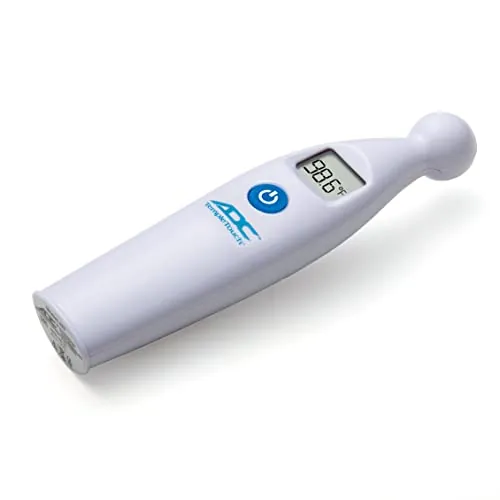
ADC Adtemp 427 Temple Touch Thermometer

#1 Overall Winner

ADC Adtemp 427 Temple Touch Thermometer

75/100
  • Fast stated 6-second temple readings
View review
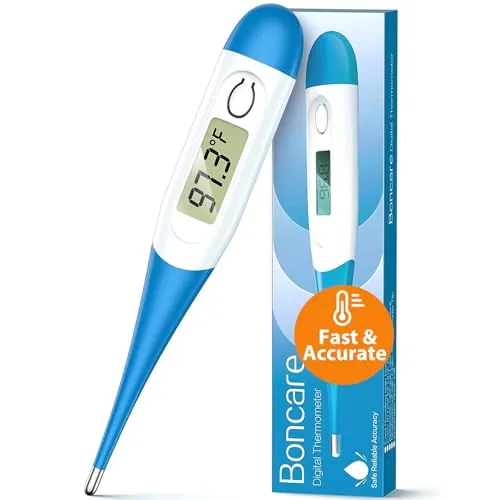
Boncare 10 Seconds Oral Thermometer

Contender

Boncare 10 Seconds Oral Thermometer

60/100
  • Low purchase price
View review

Quick verdict

Choose the ADC Adtemp 427 for the stronger all-round score, faster stated temple reading, easier maintenance, and clearer warranty coverage. Choose Boncare if low cost and multiple probe-use options are the priority. Both products have mixed feedback on reading consistency, so neither result should be treated as infallible.

Overall winner

Depends on your needs

At-a-glance comparison

Feature ADC Adtemp 427 Temple Touch Thermometer Boncare 10 Seconds Oral Thermometer Winner
Overall score 75 overall score 60 overall score ADC Adtemp 427 Temple Touch Thermometer
Measurement approach Contact temple measurement Oral, rectal, or underarm probe use Depends
Stated response time 6 seconds 10 seconds ADC Adtemp 427 Temple Touch Thermometer
Health relevance Higher health-impact score Strong basic temperature-checking relevance ADC Adtemp 427 Temple Touch Thermometer
Sleep-related convenience Can be used while a patient is sleeping No sleep-specific feature stated ADC Adtemp 427 Temple Touch Thermometer
Effectiveness Higher effectiveness score Lower effectiveness score ADC Adtemp 427 Temple Touch Thermometer
Evidence quality ASTM compliance is stated; higher evidence-quality score Clinically tested claim is stated; slightly lower evidence-quality score ADC Adtemp 427 Temple Touch Thermometer
Safety Safety score 67 Safety score 74 Boncare 10 Seconds Oral Thermometer
Ease of use Ease-of-use score 85 Ease-of-use score 88 Boncare 10 Seconds Oral Thermometer
Reading consistency Accuracy feedback is mixed; higher tracking-accuracy score Accuracy feedback is mixed; lower tracking-accuracy score ADC Adtemp 427 Temple Touch Thermometer
Build quality Build-quality score 72 Build-quality score 52 ADC Adtemp 427 Temple Touch Thermometer
Durability Durability score 73 Durability score 38 ADC Adtemp 427 Temple Touch Thermometer
Maintenance Maintenance score 86 Maintenance score 72 ADC Adtemp 427 Temple Touch Thermometer
Portability Portability score 94 Portability score 92; storage case included ADC Adtemp 427 Temple Touch Thermometer
Value Value score 85; price 15.55 Value score 84; price 6.71 Depends
Warranty and support Warranty-support score 78; two-year warranty stated Warranty-support score 28; warranty details not provided ADC Adtemp 427 Temple Touch Thermometer

Detailed comparison

Health Impact

Both products support basic at-home temperature awareness rather than ongoing health monitoring. ADC has the higher health-impact score, helped by its temple-contact design, fast stated response time, and stronger overall ownership scores. Boncare also has practical health relevance because it supports oral, rectal, and underarm measurement across age groups. Neither device offers diagnosis, health trends, or app-based interpretation, and mixed review feedback on consistency means individual readings should be interpreted carefully and used according to the product instructions.

Sleep Support

Neither thermometer is a sleep product or tracks sleep. ADC has the only clear sleep-related convenience stated in the supplied data: it can be used while a patient is sleeping. That makes its contact temple format potentially less disruptive for an occasional nighttime temperature check. Boncare has no sleep-specific feature listed and requires probe placement. ADC’s higher sleep-support score reflects this limited convenience advantage, not evidence that it improves sleep.

Recovery Support

Neither product is a recovery device and neither provides readiness, soreness, training, or post-workout guidance. Their relevance is limited to occasional body-temperature checks when someone is unwell or monitoring how they feel. ADC has the slightly higher recovery-support score, largely aligning with its quicker stated reading and easier temple-contact format. This is a minor practical distinction rather than a meaningful recovery benefit. For both products, the available information supports basic temperature measurement only.

Wellness Support

Both products can fit a practical household wellness routine by providing a quick temperature check when needed. ADC has a marginally higher wellness-support score and adds a compact temple format, memory, and strong maintenance convenience. Boncare is also straightforward for routine home use, with a storage case and multiple measurement-site options. Neither product provides broader wellness coaching, stress tools, lifestyle guidance, or health dashboards, so their wellness role remains narrow and functional.

Effectiveness

ADC has the higher effectiveness score and lists a 6-second contact-temple reading, while Boncare lists a 10-second probe reading for oral, rectal, or underarm use. ADC also states that it meets ASTM E1112 accuracy requirements for intermittent thermometers. Positive reviews for both products commonly cite speed and simplicity. However, customers also report inconsistent readings for both, so the higher ADC score should be understood as a relative advantage, not a guarantee that every measurement will be consistent. Boncare’s flexibility across measurement sites is useful, but its lower effectiveness score and reliability feedback reduce confidence relative to ADC.

Recovery Support

Neither product is a recovery device and neither provides readiness, soreness, training, or post-workout guidance. Their relevance is limited to occasional body-temperature checks when someone is unwell or monitoring how they feel. ADC has the slightly higher recovery-support score, largely aligning with its quicker stated reading and easier temple-contact format. This is a minor practical distinction rather than a meaningful recovery benefit. For both products, the available information supports basic temperature measurement only.

Evidence Quality

ADC has a small evidence-quality advantage in the supplied scores and explicitly states ASTM E1112 compliance for intermittent thermometers. Boncare states that its temperature-reading function has been clinically tested, but no further study details are provided in the supplied information. Product statements and customer reviews can describe functionality and user experience, but they do not independently establish accuracy in every setting. The available data therefore offers more concrete standards-related information for ADC, while evidence supporting Boncare’s stated accuracy claim is limited in the material provided.

ADC Adtemp 427 Temple Touch Thermometer

Pros

  • Fast stated 6-second temple readings
  • Compact, lightweight design for home kits and travel
  • Contact temple format can be used while a patient is sleeping
  • Large display, audible completion tone, auto-off, memory, and dual-scale settings
  • Water-resistant design without probe covers
  • ASTM E1112 compliance is stated in the product information
  • Two-year warranty is stated
  • Strong value, portability, and ease-of-use scores

Cons

  • Customer feedback on reading consistency is mixed
  • Some users report variable readings, particularly with children or moving infants
  • Requires correct temple placement and a stable contact point
  • Contact use may be less suitable where touch-free screening is preferred
  • Provides no app, trends, or broader health-data insights
ADC Adtemp 427 Temple Touch Thermometer

Boncare 10 Seconds Oral Thermometer

Pros

  • Low purchase price
  • Stated 10-second readings
  • Can be used orally, rectally, or under the arm
  • Soft silicone tip and stainless-steel probe
  • Includes a protective storage case
  • Waterproof tip supports straightforward cleaning
  • Simple LCD, fever alarm, memory, auto-off, and dual-scale settings
  • High ease-of-use and customer-satisfaction scores

Cons

  • Customer feedback on accuracy and reliability is mixed
  • Reviews include reports of inconsistent readings
  • Build quality and durability scores are comparatively low
  • Some buyers report early failure or limited battery life
  • No stated warranty details in the supplied data
  • No app, tracking history, or connected software
Boncare 10 Seconds Oral Thermometer

Final verdict

The ADC Adtemp 427 wins this comparison as the more rounded thermometer. It combines a faster stated response time with stronger scores for effectiveness, accuracy, build quality, durability, maintenance, brand trust, and warranty support. Boncare is a practical budget alternative with flexible probe use and slightly stronger ease-of-use and safety scores, but its lower durability and warranty-support results make it less compelling for buyers seeking a dependable long-term household option.

Overall winner

Depends on your needs

Frequently asked questions

Which is better, the ADC Adtemp 427 or Boncare 10 Seconds Oral Thermometer?

The ADC Adtemp 427 is the stronger overall option in the supplied scoring, with better effectiveness, build quality, durability, brand trust, and support scores. Boncare is the lower-priced alternative and offers oral, rectal, and underarm use. Both have mixed feedback on reading consistency, so correct use and the supplied instructions remain important.

Which thermometer is faster?

ADC lists a 6-second response time for the Adtemp 427, compared with Boncare’s stated 10-second response time. Both are designed for quick digital readings, but ADC has the stated speed advantage. Actual use can still depend on correct placement, user movement, and following each product’s instructions.

Which thermometer is better for babies and children?

Both products are marketed for children, and both have mixed review feedback on consistency. ADC’s temple-contact format may be convenient for a sleeping person, while Boncare offers rectal, oral, and underarm options. Boncare’s product information specifically includes infant use, but its reviews also raise reliability and durability concerns.

Which is easier to clean and maintain?

ADC scores higher for maintenance and is described as water resistant with no probe covers required. Boncare has a waterproof tip that can be wiped or disinfected and includes a case. The practical choice depends on whether you prefer a temple-contact surface or are comfortable cleaning a probe after each use.

Does either thermometer provide more reliable readings?

ADC has the higher tracking-accuracy score and states compliance with ASTM E1112 requirements for intermittent thermometers. However, customer reports for both products include inconsistent or variable readings. These scores and reviews do not establish medical-grade performance; users should follow product instructions and seek appropriate professional guidance when concerned about a reading.

Which offers better value for money?

Both score well for value. Boncare has the lower supplied price and includes a storage case, which suits a basic budget purchase. ADC costs more but has a stronger overall score, better durability and build-quality scores, and stated two-year warranty coverage. The better value choice depends on whether lower upfront cost or stronger ownership indicators matter more.

Which is more portable for travel?

Both are highly portable. ADC has a slightly higher portability score and is listed as compact and lightweight. Boncare is also very small and includes a protective case, a practical benefit for travel or storage in an emergency kit. Either can suit occasional on-the-go temperature checks.

Do either of these thermometers have an app or health dashboard?

No. The supplied information does not indicate that either thermometer connects to an app or provides ongoing trends, reports, or personalised health insights. They are basic digital tools intended to display an individual temperature reading rather than comprehensive health trackers.

Related comparisons

Still not sure which one to choose?

Check our rankings and expert guides to find the best health products for your goals.

View all rankings