#1 Overall Winner
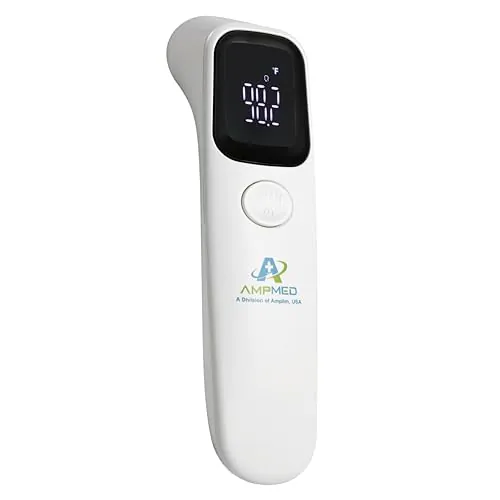
Amplim Baby Thermometer No Touch
- Non-contact forehead temperature readings for all ages
Comparison
Berrcom 3 in 1 is stronger overall for users who want forehead, ear, and object-temperature functions at a lower listed price. Amplim is stronger for a focused, quiet body-temperature-checking experience, with higher scores for comfort, portability, safety, and evidence quality. The main trade-off is Berrcom’s versatility versus Amplim’s simpler, body-temperature-only design.
#1 Overall Winner
Contender
Berrcom 3 in 1 is the better overall pick for households wanting the broadest set of temperature-checking modes and stronger value. Amplim is the better choice for users who want a compact, quiet, non-contact thermometer focused solely on body temperature. Both are fast and easy to use, but neither has unqualified review support for perfectly consistent body readings.
Overall winner
Depends on your needs
| Feature | Amplim Baby Thermometer No Touch | Berrcom 3 in 1 Forehead and Ear Thermometer | Winner |
|---|---|---|---|
| Overall score | 74 overall score | 78 overall score | Berrcom 3 in 1 Forehead and Ear Thermometer |
| Primary use | Non-contact human body-temperature checks | Forehead, ear, and object-temperature checks | Depends |
| Health relevance | 72 health-impact score | 72 health-impact score | Tie |
| Sleep support | 61; quiet, night-friendly design | 58; mute function and backlight | Amplim Baby Thermometer No Touch |
| Recovery support | 54 recovery-support score | 35 recovery-support score | Amplim Baby Thermometer No Touch |
| Effectiveness | 71 effectiveness score | 74 effectiveness score | Berrcom 3 in 1 Forehead and Ear Thermometer |
| Evidence quality | 76 evidence-quality score | 59 evidence-quality score | Amplim Baby Thermometer No Touch |
| Safety | 83 safety score | 80 safety score | Amplim Baby Thermometer No Touch |
| Comfort | 88 comfort score | 78 comfort score | Amplim Baby Thermometer No Touch |
| Ease of use | 92 ease-of-use score | 91 ease-of-use score | Amplim Baby Thermometer No Touch |
| Tracking accuracy | 66 tracking-accuracy score | 62 tracking-accuracy score | Amplim Baby Thermometer No Touch |
| Memory | Memory recall; capacity not specified | 20 stored readings | Berrcom 3 in 1 Forehead and Ear Thermometer |
| Portability | 89 portability score; 4.69 inches | 82 portability score; 6.14 inches | Amplim Baby Thermometer No Touch |
| Value | 84 value score; listed at 26.58 | 88 value score; listed at 20.93 | Berrcom 3 in 1 Forehead and Ear Thermometer |
| Warranty and support | 62 warranty-support score; one-year warranty card | 40 warranty-support score; terms not provided | Amplim Baby Thermometer No Touch |
| Customer satisfaction | 88 satisfaction score; 22,673 reviews, 4.5/5 | 86 satisfaction score; 33,638 reviews, 4.5/5 | Amplim Baby Thermometer No Touch |
Both products have the same health-impact score and are relevant primarily as tools for home temperature awareness. Their fast readings, fever alerts, clear displays, and memory features can make routine checks easier to perform and review. Amplim focuses only on human body temperature, while Berrcom extends into ear and object-temperature modes. That added flexibility does not establish a greater health benefit; it simply changes how the device can be used around the home. Neither product should be presented as a diagnostic device based on the available information.
Amplim has the higher sleep-support score and is explicitly described as quiet and night friendly, with a bright LED display intended to support checks without disturbing a sleeping child. Berrcom also supports nighttime use through its backlit color-coded display and mute function. Both offer non-contact forehead measurement, which can be convenient when minimizing disruption matters. Amplim is the more focused choice for this use case, while Berrcom remains a practical alternative for users who also want its ear and object modes.
Neither product is a dedicated recovery device, and neither is designed to address soreness, training readiness, or post-workout recovery directly. Amplim has the higher recovery-support score, likely reflecting its simpler and more convenient body-temperature-checking role, but that should not be interpreted as a recovery benefit. Berrcom can also provide quick body-temperature checks and adds general object-temperature functionality. For either device, the relevant role is limited to home temperature monitoring rather than recovery coaching or treatment.
Amplim has a small advantage in wellness-support scoring, supported by its quiet operation, simple display, and compact, non-contact format. It is designed to reduce friction in routine temperature checks for children and adults. Berrcom remains useful for general household convenience because it combines body, ear, and object-temperature modes, plus a mute function and 20-reading memory. The difference is modest: Amplim favors a streamlined routine, whereas Berrcom favors broader utility. Neither product provides app-based wellness coaching or detailed health insights.
Berrcom has the higher effectiveness score, reflecting a slightly stronger overall fit for users who want multiple functions in one thermometer. Its supplied feature set includes forehead and ear body-temperature modes, object-temperature mode, one-second results, a fever alert, and 20 stored readings. Amplim’s effectiveness score is slightly lower, but it delivers a focused set of relevant functions for non-contact body-temperature checks: fast readings, an LED display, memory recall, and fever alerting.
Customer feedback for both products is broadly positive on speed and usability but mixed on consistency of body readings. That means Berrcom’s score advantage should be treated as modest rather than as proof of superior measurement performance in every situation.
Neither product is a dedicated recovery device, and neither is designed to address soreness, training readiness, or post-workout recovery directly. Amplim has the higher recovery-support score, likely reflecting its simpler and more convenient body-temperature-checking role, but that should not be interpreted as a recovery benefit. Berrcom can also provide quick body-temperature checks and adds general object-temperature functionality. For either device, the relevant role is limited to home temperature monitoring rather than recovery coaching or treatment.
Amplim has the stronger evidence-quality score. The available listing data clearly defines its body-temperature-only purpose, non-contact infrared method, display, memory function, and supplied accessories. Its review set includes users reporting consistent results, but also reports of variation and uncertainty about reliability. Berrcom’s lower evidence-quality score reflects more limited support beyond product descriptions and customer experience, despite its broader feature set.
For both products, customer reviews indicate how some owners experienced the device; they do not verify clinical performance or establish diagnostic accuracy. The supplied information does not support medical-grade accuracy claims for either thermometer.
Both thermometers have strong safety scores and use battery-powered, non-contact infrared measurement for forehead checks. Amplim has a narrow score advantage and is designed specifically for human body-temperature measurement, which may make its intended use easier to keep clear. Berrcom adds ear and object modes, so users should ensure the correct mode and probe-cover setup are used for the intended check.
Both products have plastic housings and wipe-clean care instructions. The available data does not identify specific hazards beyond the need to use the products as directed. Mixed body-reading feedback also supports using care when interpreting an unexpected result rather than relying on a single reading alone.
Amplim leads on comfort, with a notably higher comfort score and a non-contact forehead design that avoids skin contact during routine checks. Its quiet operation also reduces disruption, particularly for babies and sleeping children. Berrcom also supports non-contact forehead use and has a mute function, but its lower comfort score and added ear-measurement configuration make it somewhat less streamlined. For users whose priority is the least intrusive checking experience, Amplim has the clearer advantage.
Both products are very easy to use, with one-second readings, illuminated digital displays, fever alerts, and Fahrenheit/Celsius options. Amplim has a marginally higher ease-of-use score and its body-temperature-only design reduces mode selection. It also includes batteries according to its listing. Berrcom is nearly equal for everyday usability and adds automatic shutoff, mute control, and 20-reading memory, but users need to select among forehead, ear, and object functions. The supplied Berrcom battery information is inconsistent, so checking the package contents may be sensible.
Amplim has the higher build-quality score. Its listing describes a plastic, wipe-clean body with a large LED display, and several reviews describe it as easy to hold or straightforward to operate. Berrcom also uses a plastic, wipe-clean construction and receives positive review comments about convenience and ergonomics, but its build-quality score is lower. The supplied reviews do not provide enough long-term construction evidence to make a stronger durability claim. On the available scores, Amplim is the better bet for physical product quality.
The durability scores are close, with Amplim holding a one-point advantage. Both are reusable, battery-powered plastic thermometers intended for indoor household use and require wipe-clean care. The supplied data does not provide a verified battery-life comparison or extensive long-term reliability evidence. Amplim has a stated one-year warranty card, which adds some ownership reassurance, while Berrcom’s warranty terms are not provided. Review feedback for both includes reports of satisfactory use and isolated functionality concerns, so long-term reliability remains somewhat uncertain.
Maintenance is effectively tied: both have the same high maintenance score, use replaceable batteries, and have wipe-clean care instructions. Neither requires charging, app updates, or calibration procedures in the supplied data. Amplim lists two included AAA batteries. Berrcom’s supplied battery information conflicts between the listing details and review overview, so buyers may want batteries available when setting it up.
Amplim is the more portable option. It has the higher portability score and a shorter listed length of 4.69 inches, compared with Berrcom at 6.14 inches. Both are battery-powered handheld devices suitable for keeping at home or packing for travel, but Amplim has the stronger compact-use profile.
Amplim has a slightly higher tracking-accuracy score than Berrcom, but neither product has unequivocal review support for consistently stable body-temperature readings. Amplim reviewers include reports of reliable readings when correct forehead distance and placement are followed, alongside reports of noticeable variation. Berrcom reviewers similarly describe some readings as accurate and consistent while others report substantial variation.
The available information therefore suggests a narrow score-based edge for Amplim, not a definitive accuracy verdict. Neither device should be described as medical grade on the supplied evidence.
Amplim has the higher data-insight score, with memory recall intended to help users view prior readings and observe changes over time. Berrcom has a lower insight score but specifies storage for up to 20 readings, which is a clearer stated capacity. Neither device has an app, connected dashboard, automated trends, or personalized guidance in the supplied data. Their data functions are limited to basic on-device history, so the practical choice depends on whether Amplim’s stronger score or Berrcom’s stated 20-reading capacity is more useful.
Personalization is limited for both thermometers. Amplim offers Fahrenheit/Celsius switching and core operating functions, while Berrcom offers Fahrenheit/Celsius switching, a mute function, and selectable forehead, ear, and object modes. Amplim has the slightly higher personalization score, but Berrcom’s extra modes provide more functional flexibility. Neither product offers user profiles, custom health goals, app settings, or individualized recommendations. Choose Amplim for simplicity or Berrcom for more measurement configurations.
Berrcom has the higher value score and lower listed price, while adding ear and object-temperature modes, auto shutoff, mute functionality, and storage for 20 readings. For a household that will use those modes, it offers broader functionality per purchase. Amplim costs more but has stronger scores for comfort, portability, safety, evidence quality, build quality, customer satisfaction, and warranty/support. It also lists included batteries and a one-year warranty card.
Value therefore depends on the intended role: Berrcom is stronger for multi-purpose use, while Amplim may justify its higher price for users who prefer a compact, quiet, body-temperature-only device.
Amplim has the higher brand-trust score, supported in the provided product data by a stated one-year warranty card, included batteries, and a clear body-temperature-only use case. Berrcom has a lower brand-trust score despite a larger review count and many positive comments about price and convenience. Its provided battery information is inconsistent, and warranty terms are not supplied. Neither score alone verifies product quality or measurement accuracy, but the available data gives Amplim a modest edge in ownership confidence.
Both products have a 4.5/5 average rating and substantial review volume. Amplim has the slightly higher customer-satisfaction score, with 22,673 reviews, while Berrcom has 33,638 reviews. Common positive themes for both are quick results, simple operation, readable illuminated displays, and usefulness for family checks. Amplim reviewers also highlight quiet use and included batteries; Berrcom reviewers frequently value the added modes and price.
The main shared negative theme is inconsistent body-temperature readings. Some Berrcom reviewers also mention missing batteries, while one Amplim reviewer raised concern about an older manufacturing batch. These are review signals, not verified performance conclusions.
Amplim has the higher warranty/support score and its included-components list names a one-year warranty card. Berrcom’s warranty or return terms are not provided in the available data, which limits assessment of post-purchase support. This gives Amplim the clearer advantage for buyers who place weight on stated warranty documentation. Exact coverage conditions and support experience are not available for either product.
Berrcom 3 in 1 wins narrowly overall because it pairs a higher overall score with better effectiveness and value, a lower listed price, and more measurement options. Amplim is the more compelling specialist choice: it scores better for comfort, safety, portability, tracking accuracy, evidence quality, customer satisfaction, and warranty/support, while keeping the experience focused on quiet non-contact body-temperature checks.
For multi-purpose family use, choose Berrcom. For the simplest and most portable nighttime body-temperature routine, choose Amplim. The supplied data does not support a definitive accuracy winner, as both products receive mixed feedback on reading consistency.
Overall winner
Depends on your needs
Berrcom has the higher overall score and leads on effectiveness and value, largely because it combines forehead, ear, and object-temperature modes at a lower listed price. Amplim remains a strong alternative for users who prioritize a simpler body-temperature-only design, higher comfort and portability scores, and stronger evidence-quality and warranty/support scores.
Amplim is the better fit for quiet, straightforward nighttime forehead checks. Its listing specifically emphasizes low-noise use, a bright LED display, and non-contact operation. Berrcom also has a mute function, backlit display, and non-contact forehead mode, so it is also suitable when its added ear and object modes are useful.
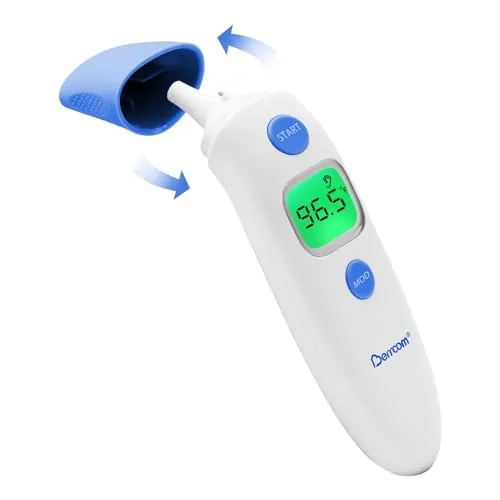
Berrcom offers more measurement options. It can be used for forehead and ear body-temperature readings, and its listing includes object-temperature and room-temperature functionality. Amplim is designed specifically for human body-temperature measurement. That narrower focus may suit households that do not need general object or room checks.
The available data does not establish a clear accuracy winner. Amplim has a slightly higher tracking-accuracy score and a stronger evidence-quality score, while Berrcom has a higher effectiveness score. Both listings include positive reports of quick, consistent readings as well as customer reports of inconsistent body-temperature results. Neither should be treated as medical-grade based on the supplied data.
Berrcom has the stronger value score and the lower listed price, while also offering ear, forehead, and object-temperature modes. Amplim costs more but includes batteries according to its listing, has stronger comfort and portability scores, and includes a one-year warranty card. The better value choice depends on whether versatility or a simpler body-temperature-focused design matters more.
Both are highly rated for ease of use and provide readings in about one second. Amplim has a marginally higher ease-of-use score and a simpler body-temperature-only purpose, which may reduce confusion. Berrcom remains beginner-friendly, but its ear, forehead, room, and object modes introduce more settings to understand.
Amplim has the slightly higher customer-satisfaction score, while Berrcom has the larger review base. Both hold a 4.5/5 average rating in the provided data. Reviewers commonly praise speed, readable displays, and convenience, but both products also receive recurring criticism about inconsistent readings from some users.
No. The provided information supports that both products are intended to measure temperature and provide fever alerts, but customer reviews are not clinical evidence. The score data also notes mixed feedback about reading stability and accuracy. These devices can support home temperature checks, but the supplied data does not establish diagnostic or medical-grade performance.
Check our rankings and expert guides to find the best health products for your goals.