LifestyleRanker
Menu

Review

Garmin Forerunner 265 Review: Running, Recovery, GPS

The Garmin Forerunner 265 is a running-focused GPS smartwatch built for training, recovery tracking, and multi-sport use. It stands out for strong fitness support, detailed insights, and very high customer satisfaction. Its main drawback is a steeper learning curve than simpler wearables, especially for advanced features and app workflows.
Expert reviewed
89
Overall score
Data-driven scoring Expert reviewed Updated analysis

Why we ranked it highly

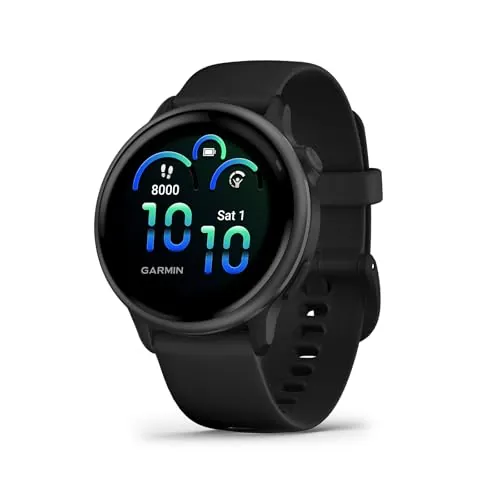
The Garmin Forerunner 265 is a GPS running smartwatch designed for people who want more than basic activity tracking. It combines a 1.3-inch AMOLED display, button and touchscreen controls, multi-band GNSS, optical heart rate tracking, and more than 30 activity profiles. Garmin positions it around structured training, with features such as training readiness, morning reports, HRV status, race planning, suggested workouts, and training status. Based on the available data, it is best aligned with runners and active users who want performance-focused insights across training, sleep, and recovery. It also supports broader smartwatch use through notifications, Garmin Pay, music features, and up to 13 days of battery life in smartwatch mode. Review sentiment suggests it performs especially well for running and exercise, though some users note that deeper features and menus can take time to learn.
90-day review Expert reviewed User feedback Data scoring

Key specs

Additional details

Operating System
android
Additional Features
1.3" Colorful AMOLED Display; Up To 20 Hours of Battery Life In GPS Mode; Advanced Training Metrics and Recovery Insights, Satiq™ and Multi-Band GPS; Touchscreen And Buttons; Music On Your Wrist
GPS Geotagging Functionality
True
Band Material Type
Silicone
Water Resistance Level
Water Resistant
Sport Type
Cardio, Exercise & Fitness, Running
Human Interface Input
Buttons, Touchscreen
Supported Application
GPS
Water Resistance Depth
50 Meters
Language
English
Supported Satellite Navigation System
GPS
Controller Type
Push Button
Metrics Measured
Optical Heart Rate Sensor, Multi-band GPS
Closure Type
Buckle

Style

Shape
Round
Style Name
Modern
Color
Black and Powder Gray
Band Color
Black/Powder Gray

Connectivity

Connectivity Technology
Bluetooth, USB, Wi-Fi
Wireless Compability
Bluetooth
Wireless Provider
du
Communication Feature
True

Compatibility

Compatible Devices
Smartphone
Compatible Phone Models
Android Devices, iOS Devices

Memory & Storage

Memory Storage Capacity
8 GB

Item details

Brand
Garmin
Model Name
Garmin Forerunner 265
Target Audience
Unisex Adult
Age Range Description
Adult
Model Number
010-02810-00
Built-In Media
Forerunner 265; Charger/Data Cable, Documentation
Wearable Computer Type
Smart Watch
UPC
753759313715
Manufacturer
Garmin
Unit Count
1.0 Count
Item Type Name
GPS Smartwatch

Battery

Battery Capacity
2000 Milliamp Hours
Battery Cell Type
Lithium Polymer
Battery Average Life
13 days

Display

Screen Size
1.3 Inches
Display Type
AMOLED
Resolution
416 x 416

Measurements

Item Weight
47 Grams
Item Dimensions
1.81 x 1.81 x 0.51 inches

User guide

Waterproof Rating
IP68

Scores breakdown

87 /100

Health impact

96 /100

Fitness support

82 /100

Sleep support

92 /100

Recovery support

78 /100

Wellness support

93 /100

Effectiveness

80 /100

Evidence quality

86 /100

Safety

Strengths

  • Excellent fitness support for running and multi-sport training
  • Strong recovery and training insight features including training readiness and HRV status
  • High tracking performance with multi-band GNSS and SatIQ
  • Bright AMOLED display with both touchscreen and button controls
  • Long battery life for a feature-rich GPS smartwatch
  • Broad activity coverage with 30+ built-in sport profiles
  • Lightweight design that appears suitable for all-day wear
  • Very strong customer satisfaction across a large review base

Limitations

  • Learning curve is noticeable for some users
  • Some Garmin Connect workflows appear basic or less intuitive in reviews
  • Health and recovery metrics are presented as close estimations, not clinical measurements
  • Advanced features may be more than casual users need
  • Safety features require smartphone pairing, setup, and network coverage
  • Warranty and support picture is not especially strong from the available score
  • Price is mid-range to premium rather than entry-level
  • Some users may prefer simpler menus and faster access to specific training functions

Ideal user profiles

  • Runners who want detailed training metrics and recovery guidance
  • Multi-sport users who switch between running, cycling, swimming, and triathlon
  • Active adults who want strong GPS performance and long battery life
  • Users who value performance data and are willing to learn a deeper feature set
  • People who want a training-focused smartwatch rather than a general lifestyle watch

Use cases

  • Daily run tracking with pace, GPS, and heart rate data
  • Race preparation using suggested workouts and the race widget
  • Monitoring sleep, HRV status, and training readiness over time
  • Cross-training across cycling, swimming, triathlon, and gym sessions
  • Outdoor workouts in challenging environments where GPS accuracy matters
  • All-day activity tracking with smart notifications and on-wrist payments
  • Phone-free music listening during runs or workouts
  • General training load and recovery management

Fit and positioning

Who this works for

Health positioning

The Forerunner 265 sits mainly in the fitness and training smartwatch category, with a secondary role in general health and wellness monitoring. Its strongest focus is helping users understand activity, training load, recovery status, sleep patterns, and daily readiness rather than acting as a medical health device. Garmin also notes that several metrics are close estimations. In broader wellness terms, it is best viewed as a performance-oriented wearable that supports awareness and routine tracking rather than a standalone health solution.

Best for

This watch is best suited to runners, endurance users, and active adults who want detailed performance metrics, recovery context, and strong GPS support. Its highest scores are in fitness support, recovery support, effectiveness, tracking accuracy, data insight, and customer satisfaction. People training for events, managing multi-sport routines, or wanting a long-battery training watch will likely get the most out of its feature set.

Not best for

The Forerunner 265 may be less suitable for buyers who want a very simple smartwatch or only need basic step tracking and notifications. The ease of use score is lower than many of its other scores, and reviews suggest some features take time to understand. It may also be a weaker fit for users expecting clinical health measurements, since Garmin states that several tracked metrics are estimates rather than exact medical readings.

Health benefits

The main health relevance of the Forerunner 265 is improved awareness of daily patterns rather than medical monitoring. It provides data on heart rate, sleep, HRV status, stress-related metrics mentioned in reviews, and morning reports that combine recovery and training outlook. For many users, that can support better understanding of effort, rest, and routine consistency. Garmin also makes clear that these metrics are intended as close estimations, so they are better used for trends and general decision support than for clinical interpretation.

Performance analysis

How it performs in practice

Each scoring dimension is separated into a compact card so the strengths and tradeoffs are easier to compare without reading one long block.

Effectiveness analysis

With an effectiveness score of 93, the Forerunner 265 appears to perform very well at its core purpose: supporting structured training and outdoor activity tracking. The product data highlights multi-band GNSS, training readiness, race planning, suggested workouts, and a wide set of activity profiles. Reviews consistently praise GPS performance, battery life, display readability, and the usefulness of training metrics. The main performance concern is not the hardware itself but the complexity of some advanced workflows, which may slow down users who want faster access to certain functions.

Evidence quality

The evidence quality score of 80 suggests a solid but not clinical-grade support level for the watch’s core functions. There is good practical support for features such as GPS tracking, heart rate monitoring, activity profiles, and user-facing training insights, backed by strong review sentiment. However, Garmin also explicitly states that some health, readiness, and recovery metrics are intended to be close estimations. That means the watch is better supported as a consumer training tool than as a source of definitive health conclusions. The available evidence is strongest around fitness functionality and weakest around any interpretation that would go beyond trend guidance.

Safety

The safety score of 86 points to a generally strong profile for a sports smartwatch. The Forerunner 265 includes incident detection and Assistance for select outdoor activities, which can add practical safety value, but these features depend on setup, smartphone pairing, and network coverage. It is also water resistant to 50 meters, which supports use around sweat, rain, and swimming within intended conditions. As with other wearables, the main sensible considerations are proper fit, charging care, and understanding that safety features are not fully independent emergency systems without a connected phone.

Comfort

The comfort score of 88 fits the product’s lightweight 47 g build and silicone band. Reviews repeatedly describe it as light, easy to wear, and suitable for long training sessions and daily use. The 46 mm case may still feel large for some wrists, so fit preference matters, but overall the design appears to balance a readable display with good wearability.

How it compares

Within the fitness smartwatch category, the Forerunner 265 appears stronger than average for structured training, GPS performance, recovery insights, and battery life. It is particularly well positioned for running and multi-sport use rather than basic lifestyle tracking alone. Its AMOLED display and lightweight design also help it compete on daily usability and comfort. Where it looks less strong is simplicity: the feature set is deep, but the learning curve is real. That means it compares best as a performance-oriented training watch for active users, not as the easiest option for first-time wearable buyers who only want core smartwatch basics.

Ranking summary

The Forerunner 265 earns a high overall score of 89 because it performs strongly across the areas that matter most for a training smartwatch. Its standout sub-scores include fitness support at 96, recovery support at 92, effectiveness at 93, tracking accuracy at 90, data insight at 91, brand trust at 92, and customer satisfaction at 96. These strengths are balanced by weaker scores in ease of use at 74, app experience at 76, and warranty support at 72. In ranking terms, it sits as a very strong option for serious runners and active users, with its position driven by performance depth more than beginner simplicity.

Buying advice

You should consider the Forerunner 265 if you want a running-focused smartwatch with strong GPS performance, long battery life, and detailed training and recovery metrics. It makes the most sense for runners, multi-sport users, and active people who will use features such as training readiness, HRV status, race planning, and suggested workouts. You may want to avoid it if you prefer very simple menus or only need basic health and notification functions. Before buying, check case size preference, phone compatibility, how much you want to rely on Garmin Connect, and whether you are comfortable using estimated health-style metrics as trend tools rather than exact measurements.
89
Overall score

Final verdict

The Garmin Forerunner 265 is a very strong option in the running smartwatch category. Its main strengths are deep fitness support, useful recovery context, strong GPS capability, and broad customer satisfaction, all supported by a bright AMOLED display and solid battery life. Its main limitation is that the experience can be more complex than casual users may want, especially when navigating advanced features and app workflows. Overall, this is best suited to users who train regularly and want richer performance data, rather than those looking for the simplest possible wearable.
Back to review

Key topics

Garmin Forerunner 265 review, Garmin Forerunner 265 running smartwatch, running smartwatch review, GPS running watch with AMOLED, Garmin training readiness watch, multi-band GPS smartwatch, sleep and recovery tracking watch, fitness tracking smartwatch, Garmin Connect review, best running watch for training

Frequently asked questions

Is the Garmin Forerunner 265 good for running training?
Yes. Based on the product details and scores, the Forerunner 265 is especially strong for running training. It combines multi-band GPS, wrist-based running power, personalized suggested workouts, and training readiness tools. Its fitness support score of 96 and effectiveness score of 93 suggest it is better suited to structured training than many general-purpose smartwatches.
Is the Garmin Forerunner 265 useful for sleep and recovery tracking?
It appears useful for monitoring sleep and recovery trends rather than providing clinical sleep analysis. The watch includes sleep overview, HRV status, morning reports, recovery insights, and training readiness. With a sleep support score of 82 and recovery support score of 92, it looks particularly strong for athletes who want recovery context alongside training data.
How accurate is the Garmin Forerunner 265 for GPS tracking?
The available data points to strong GPS performance. Garmin includes multi-band GNSS with SatIQ, and customer reviews repeatedly praise route accuracy and stability. The tracking accuracy score is 90, which supports the view that it performs well for outdoor training. That said, the brand notes some tracked metrics are still close estimations rather than exact measurements.
Does the Garmin Forerunner 265 require an app?
Some of its more advanced training and planning features depend on the Garmin Connect app. For example, race strategy and personalized suggested workouts are linked to information entered into the app. The watch can still function as a smartwatch and fitness tracker on its own, but users will get more value if they are willing to use the companion app.
Is the Garmin Forerunner 265 easy for beginners to use?
It is usable for beginners, but not the simplest option in the category. The ease of use score is 74, and review feedback suggests a learning curve around menus and advanced features. People who want deep metrics may find that worthwhile, while buyers looking for a very simple tracker may prefer something more basic.
Is the Garmin Forerunner 265 comfortable enough for all-day wear?
The signs are positive. It has a lightweight 47 g design, a silicone band, and an AMOLED screen in a 46 mm case. Reviews often describe it as light and comfortable for training and daily wear. Its comfort score of 88 suggests it should suit regular use well, though wrist size and preference still matter.
Does the Garmin Forerunner 265 offer good value for money?
It appears to offer solid value if you will use its training and recovery tools. The value score of 84 reflects a product that is not budget-priced but offers a broad feature set, strong battery life, quality GPS, and high customer satisfaction. For casual users who only need basic step counting, it may be more watch than necessary.
What are the main limitations of the Garmin Forerunner 265?
The main limitations are usability complexity and the fact that advanced health-style metrics are estimates. Some reviews also mention that Garmin Connect workflows can feel basic or less intuitive in certain training setups. In addition, safety messaging features depend on a paired smartphone and network coverage, so they are not fully standalone.
How does the Garmin Forerunner 265 compare with other fitness smartwatches?
Within its category, it appears more training-focused than general lifestyle smartwatches. Its strongest areas are fitness support, recovery insights, data depth, GPS capability, and battery life. Its weaker area is simplicity, as the feature set can take time to learn. That makes it better suited to active users than to buyers who mainly want basic smartwatch functions.
Are the health and recovery claims for the Garmin Forerunner 265 well supported?
The claims should be viewed as informed estimates rather than medical measurements. Garmin explicitly states that certain data is intended to be a close estimation of tracked metrics. The evidence quality score of 80 suggests a fairly credible feature set for consumer fitness use, but not a clinical standard for diagnosing or managing health conditions.

Related Guides & Rankings